| |
| Wednesday, 21 October 2026 |
| Edouard Manet and music |
| Lois Oliver |
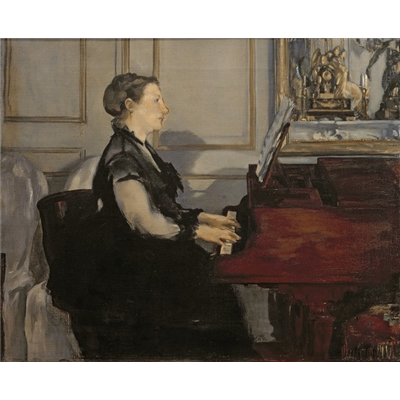 |
Madame Manet at the piano, Edouard Manet 1868 - Musée d’Orsay, Paris Music was a constant theme in Manet’s life and art. His wife, Suzanne Leenhoff, was a gifted pianist, and they regularly held musical soirées at the Manet home. His pictures of musicians and their audiences range from major early canvases depicting itinerant gypsy musicians and Spanish dancers to paintings encompassing the full range of Parisian musical culture; from private performances to street entertainment, café concerts and the Paris Opera. This lecture will immerse you in Manet’s world of art and music. |
|
| Wednesday, 18 November 2026 |
| Antoni Gaudi i Cornet: God’s architect |
| Anne Anderson |
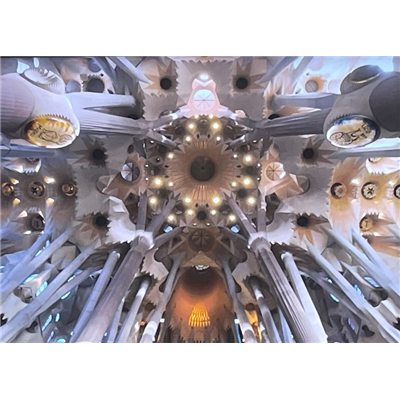 |
Interior of la Sagrada Familia, photo Jane Stephenson His style was unmistakably his own, from the colourful Casa Batlló and curvilinear Casa Milà to the grandiose la Sagrada Familia. Everything about Gaudi is larger than life. He died 100 years ago and was buried in his beloved Sagrada Familia, which had dominated his life from 1915. Yet on his death little was completed, just the crypt, apse, and part of the Nativity façade. After WW2 la Sagrada Familia was ridiculed, until Salvador Dali championed Gaudi in the 1950s. His vision will be finally completed this year. |
|
| Wednesday, 20 January 2027 |
| Cracking glass: the big four, postwar glass companies |
| Mark Hill |
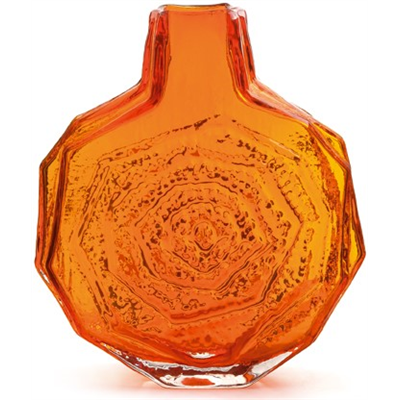 |
Whitefriars vase Geoffrey Baxter, photo Graham Rae These four outstanding manufacturers, Whitefriars, King’s Lynn (Wedgwood), Caithness and Dartington, changed the face of British glassware after WW2. As well as the histories of the companies and their designers, special slides will examine, compare and contrast ‘good, better, best’ examples from each company. The emergence of such innovative glassware factories is put into context, with the major influences behind them discussed. The current glut of Whitefriars fakes is covered, including tips on how to spot them! |
|
| Wednesday, 17 February 2027 |
| The cultural heritage of the Huguenots |
| Sue Jackson |
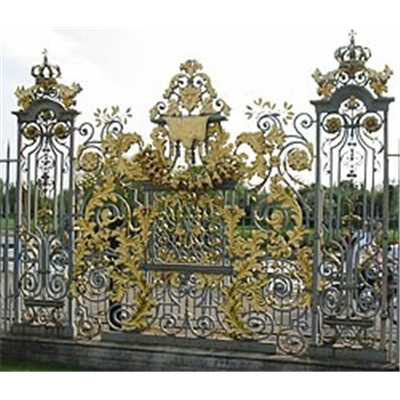 |
Hampton Court gates by Tijou (©) HRP They came to late 17th century England in huge numbers, bringing a wide variety of skills - as silk weavers, silversmiths, clock makers, opticians, bankers, gilders, ironworkers and horticulturists. Names such as Paul de Lamerie, Samuel Courtauld and Jean Tijou spring to mind. In virtually all areas they were innovators and more advanced than the English, who were forced to improve their skills or go out of business. Although they mainly stayed in London, others settled in East Anglia, Macclesfield and Canterbury. We consider their cultural legacy. |
|
| Wednesday, 17 March 2027 |
| Thomas Gainsborough a life: Surprising resemblance and perfection |
| Matthew Morgan |
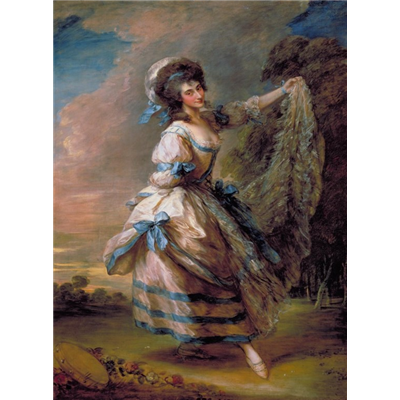 |
Giovanna Baccelli by Gainsborough This year is the 300th anniversary of Gainsborough’s birth. As one of the greatest portrait painters Britain has ever produced, he captured the inner lives of his sitters, while his dramatic use of paint and his remarkable approach to colour set him apart from his contemporaries. Yet, although regarded in his lifetime as one of the pre-eminent portrait painters, the genre Gainsborough truly loved was landscape. We look at his life and work, his experimental technique and his fraught relationship with portraiture, the genre in which he excelled. |
|
| Wednesday, 21 April 2027 |
| The art of Art Deco |
| Pamela Campbell-Johnston |
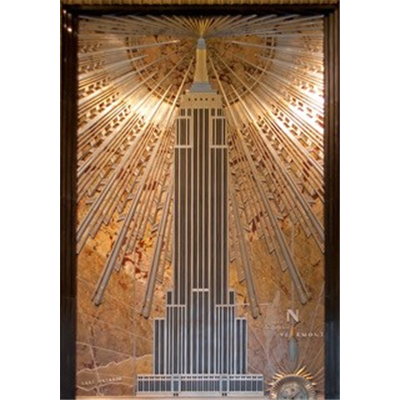 |
Empire State building decoration Art Deco has the enviable reputation of being the most glamorous and popular style of the 20th century, during the 1920s and 1930s. We’ll review its development within the social and economic context, as well as considering examples of objets d’arts, including silver, jewellery, furniture, ceramics and clocks. We will look at some designers - René Lalique, Marion Dorn, Eileen Gray, Romain de Tirtoff (Erté), Clarice Cliff, Tamara de Lempicka - and examples of domestic and civic architecture in the UK, US and NZ, confirming Art Deco’s global reach. |
|
| Wednesday, 26 May 2027 |
| Off the record: album cover art 1950-2000 |
| Rupert Dickens |
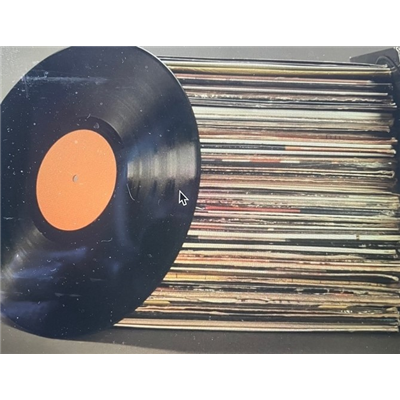 |
Some of the most iconic images of the 20th century were not created for galleries or private patrons, but for record sleeves. The zebra crossing, immortalised on the Beatles’ Abbey Road album cover, is a site of pilgrimage for people travelling thousands of miles. Album covers have been adorned by Andy Warhol, Peter Blake, Salvador Dali, Richard Hamilton, plus lesser-known artists and designers. We explore album cover art to reveal the close connections between visual and musical creativity in this vibrant period of popular culture. |
|
| Wednesday, 16 June 2027 |
| In the footsteps of Christopher Wren: Norman Foster and
Richard Rogers
|
| Brian Stater |
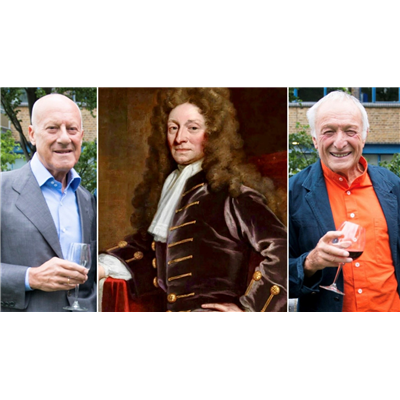 |
Sir Norman Foster, Sir Christopher Wren and Sir Richard Rogers Foster and Rogers are the most celebrated British architects of the last 100 years, building around the world in steel, glass and concrete. When Rogers was awarded the Royal Gold Medal for Architecture in 1985 the citation observed that he was ‘the rightful heir to the traditions of Wren’. And the same could certainly be said of Foster. This lecture demonstrates that Wren might well have recognised Foster and Rogers as kindred spirits, as they all transformed the London skyline and produced architecture which expressed the spirit of their age. |
|